Text
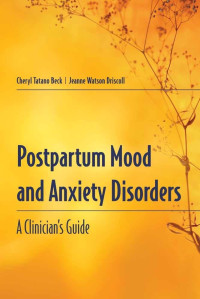
POSTPARTUM MOODAND ANXIETY DISORDERS
In 1993, at the annual convention of the Association of Women’s Health,
Obstetrical, and Neonatal Nursing in Reno, Nevada, we (Cheryl and
Jeanne) were walking down the hall from opposite directions when our
eyes met each other’s name tag; our walking came to a halt. We were finally
going to meet, something that each of us had hoped would happen for a
long time. We were aware of the other’s experience and contributions to
women’s health. It was the meeting of kindred spirits. It was that meeting
that had set the stage for the evolution of the book that you are holding.
Over the years, we have collaborated in various facets of research and ed-
ucation. Using the metaphor of the hand and glove, we have been a perfect
fit—the researcher and the clinician. I (Cheryl) invited Jeanne to be a
member of my research team in the validation of the Postpartum Depres-
sion Screening Scale. As a result of that connection, I (Jeanne) enrolled in the
doctoral program at the University of Connecticut, with Cheryl as my major
advisor. Five years later, with my doctorate behind me, we arrive at this col-
laboration, Postpartum Mood and Anxiety Disorders: A Clinician’s Guide. The
premise of this book is the integration of research and clinical practice. This
partnership of our research program (Cheryl’s) and clinical practice
(Jeanne’s) is the cornerstone of this book. Cheryl brings to this book over 20
years of researching postpartum mood and anxiety disorders. Jeanne brings
over 24 years of clinical practice as a psychiatric clinical nurse specialist in
private practice focusing on the mental health care of women during their
reproductive years. It is the alliance of practice and research that leads to
advances in clinical practice, theory development, and
Ketersediaan
Tidak ada salinan data
Informasi Detail
- Judul Seri
-
-
- No. Panggil
-
-
- Penerbit
- : Jones and Bartlett.,
- Deskripsi Fisik
-
-
- Bahasa
-
English
- ISBN/ISSN
-
-
- Klasifikasi
-
NONE
- Tipe Isi
-
-
- Tipe Media
-
-
- Tipe Pembawa
-
-
- Edisi
-
-
- Subjek
-
-
- Info Detail Spesifik
-
-
- Pernyataan Tanggungjawab
-
-
Versi lain/terkait
Tidak tersedia versi lain
Lampiran Berkas
Komentar
Anda harus masuk sebelum memberikan komentar
 Karya Umum
  Filsafat
  Agama
Agama  Ilmu-ilmu Sosial
  Bahasa
  Ilmu-ilmu Murni
  Ilmu-ilmu Terapan
  Kesenian, Hiburan, dan Olahraga
  Kesusastraan
  Geografi dan Sejarah
  Jurnal
  Proceeding