Text
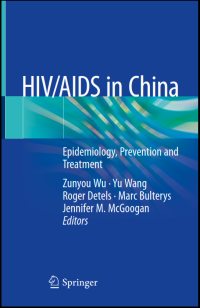
HIV/AIDS in China : Epidemiology, Prevention and Treatment
China is vast, diverse, complex, and dynamic, and its HIV epidemic reflects these features. The surge of political, economic, and social change that came after the founding of the People’s Republic of China in 1949 set the stage, and the departure from isolationist policies and movement toward participation in the global economy in the 1970s opened the door. HIV came to China in an outbreak among people who inject drugs in the southwest region in the late 1980s and again in a major outbreak among former commercial plasma donors in the mid- 1990s. Over the past 30 years, China’s HIV epidemic has expanded to other key populations (e.g., commercial sex workers, men who have sex with men) and all regions. The count of 146 people diagnosed in 1989 has grown to an estimated 1.25 million people as we enter 2019. The epidemic has steadily grown and expanded and has evolved into two parallel epidemics, one heterosexual and the other among men who have sex with men. This chapter documents the evolution of China’s HIV epidemics—their general features, epidemiology, and impact.
Ketersediaan
Tidak ada salinan data
Informasi Detail
- Judul Seri
-
-
- No. Panggil
-
HIV/AIDS in China
- Penerbit
- : ., 2020
- Deskripsi Fisik
-
681 Halamaan
- Bahasa
-
English
- ISBN/ISSN
-
ISBN 978-981-13-8518-6
- Klasifikasi
-
NONE
- Tipe Isi
-
-
- Tipe Media
-
-
- Tipe Pembawa
-
-
- Edisi
-
-
- Subjek
-
-
- Info Detail Spesifik
-
Over the last three decades, China has experienced rapid social and economic transitions. During this period, China has moved from a closed country to an open country and moved from one of least developed countries in the early 1980s to now having the second largest gross domestic product (GDP) in the world. The rapid developments in aviation domestically and internationally, highways, and railway, including speed trains, have facilitated the movement of large numbers of people internally and externally. Housing in cities has moved from primarily being publicly owned to now completely privately owned. China has shifted from a purely socialist to now a more capitalist-like country. China has risen from being a low-income country (1987–1996) with all its people equally poor to a lower-middle-income country (1997–2009) and today an upper-middle-income country (2010–2017, The World Bank 2018), with many billionaires and millions of poor people. The rich have become richer, and the gap between the rich and the poor has widened significantly.
- Pernyataan Tanggungjawab
-
Zunyou Wu • Yu Wang • Roger Detels Marc Bulterys • Jennifer M. McGoogan
Versi lain/terkait
Tidak tersedia versi lain
Lampiran Berkas
Komentar
Anda harus masuk sebelum memberikan komentar
 Karya Umum
  Filsafat
  Agama
Agama  Ilmu-ilmu Sosial
  Bahasa
  Ilmu-ilmu Murni
  Ilmu-ilmu Terapan
  Kesenian, Hiburan, dan Olahraga
  Kesusastraan
  Geografi dan Sejarah
  Jurnal
  Proceeding